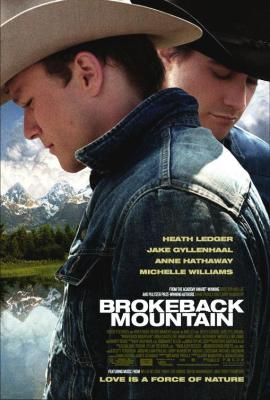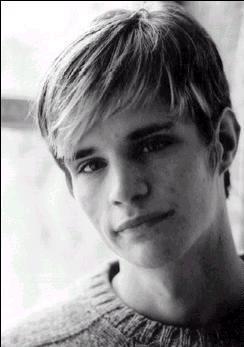
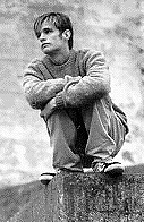
Gerade fällt mir auf, dass Matthew Shepard in Wyoming umgebracht wurde. Um so mehr freue ich mich, dass Brokeback Mountain dort spielt.
Shepard wurde von zwei Trailer-Trash-Faschos zusammengeschlagen, dann mit seinen Schnürsenkeln in Kreuzigungspose an einen Zaun gefesselt, wo er fast verblutete. Die Schläger klauten ihm vorsorglich auch noch die Schuhe. Er starb allerdings erst fünf Tage später im Krankenhaus. Er war 21 Jahre alt.
Ein Jahr zuvor war er bei einem Roundtrip durch Marokko von einer Gruppe von Männern vergewaltigt worden und, ebenfalls seiner Schuhe beraubt, irgendwo in der marokkanischen Tundra ausgesetzt worden. In Folge der Vergewaltigung war er HIV positiv.
Präsident Clinton bemühte sich angesichts des Mordes, sexuelle Orientierung als Motivierung für ein „Hate-Crime“ offiziell anerkennen zu lassen. Es gelang ihm nicht. Russel Anderson und Aaron MacKinney, Matthews Mörder, sitzen dennoch lebenslänglich.
In der Woche com 6.10. bis 12.10.1998 bekam ich von all dem nichts mit, wel ich ein glücklich verliebtes Großstadtschwulenleben lebte. Als ich im März 1999 von einem Marokko-Urlaub zurück kam (auf dem meine große Liebe kaputt gegangen war), las ich Matthews Geschichte im Vanity Fair.
Mittlerweile gibt es ein Theaterstück und mehrere Filme über Matthew. Aufgrund seines Todes werden die Stadt Laramie und der Staat Wyoming noch eine verdient lange Zeit als Synonym für Schwulenhass und Ignoranz gelten. Matthews Eltern haben die Matthew Shepard Foundation gegründet und setzen sich gegen Hass und Ignoranz gegenüber Minderhieten ein.
„“They tied him to a post,“ says police commander Dave O’Malley, and as he begged for his life, they „beat him and beat him.“ Perhaps as an afterthought, police say, the pair took Shepard’s wallet and his shoes. The back of his head bashed to the brain stem, his face cut, his limbs scorched with burn marks, Shepard hung spread-eagled on a rough-hewn deer fence through a night of near freezing temperatures, unconscious and losing more and more blood. On the evening of the next day, 18 hours after he was abandoned, two bicyclists saw him. At first, they thought they were looking at a scarecrow. On seeing his nephew’s near lifeless body hooked up to a respirator, Robert Eaton told a reporter, „It’s like something you might see in war.““
Mehr: „That´s not a scarecrow“ Time Magazine, Oct. 1998
„My son Matthew did not look like a winner. After all, he was small for his age-weighing, at the most, 110 pounds, and standing only 5’2“ tall. He was rather uncoordinated and wore braces from the age of 13 until the day he died. However, in his all too brief life, he proved that he was a winner. My son-a gentle, caring soul-proved that he was as tough as, if not tougher than, anyone I have ever heard of or known. On October 6, 1998, my son tried to show the world that he could win again. On October 12, 1998, my first-born son-and my hero-lost. On October 12, my first-born son-and my hero- died 50 days before his 22nd birthday. He died quietly, surrounded by family and friends, with his mother and brother holding his hand. All that I have left
now are the memories.
(…)
Mr. McKinney, one final comment before I sit, and this is the reason that I stand before you now. At no time since Matt was found at the fence and taken to the hospital have Judy and I made any statements about our beliefs concerning the death penalty. We felt that that would be an undue influence on any prospective juror. Judy has been quoted by some right-wing groups as being against the death penalty. It has been stated that Matt was against the death penalty. Both of these statements are wrong. We have held family discussions and talked about the death penalty. Matt believed that there were incidents and crimes that justified the death penalty. For example, he and I discussed the horrible death of James Byrd, Jr. in Jasper, Texas. It was his
opinion that the death penalty should be sought and that no expense should be spared to bring those responsible for this murder to justice. Little did we know that the same response would come about involving Matt. I, too, believe in the death penalty. I would like nothing better than to see you die, Mr. McKinney. However, this is the time to begin the healing process. To show mercy to someone who refused to show any mercy. To use this as the first step in my own closure about losing Matt. Mr. McKinney, I am not doing this because of your family. I am definitely not doing this because of the crass and unwarranted pressures put on by the religious community. If anything, that hardens my resolve to see you die. Mr. McKinney, I’m going to grant you life, as hard as that is for me to do, because of Matthew. Every time you celebrate Christmas, a birthday, or the Fourth of July, remember that Matt isn’t. Every time that you wake up in that prison cell, remember that you had the opportunity and the ability to stop your actions that night. Every time that you see your cell mate, remember that you had a choice, and now you are living that choice. You robbed me of something very precious, and I will never forgive you for that. Mr. McKinney, I give you life in the memory of one who no longer lives. May you have a long life, and may you thank Matthew every day for it.“
(Schlussrede von Dennis Shepard im Prozess gegen die Mörder seines Sohnes.)
So. Noch irgendjemand, der findet, dass es keinen Film über Diskriminierung von Schwulen mehr geben muss?
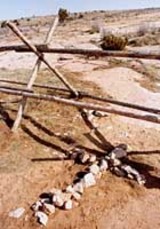
*Zitat von Matthews Mutter.
Edit May 2010, after reading Judy Shepard´s Book:
1) Die Kreuzigungspose gab es nicht. Er lag am Boden, die Hände hiterm Rücken an den Zaun gefesselt.
2) Die HIV-Infektion zog er sich nicht bei der Vergewaltigung, sondern später zu. Die Eltern erfuhren im Krankenhaus von seinem HIV-Status, er selbst wusste vermutlich nichts davon.